
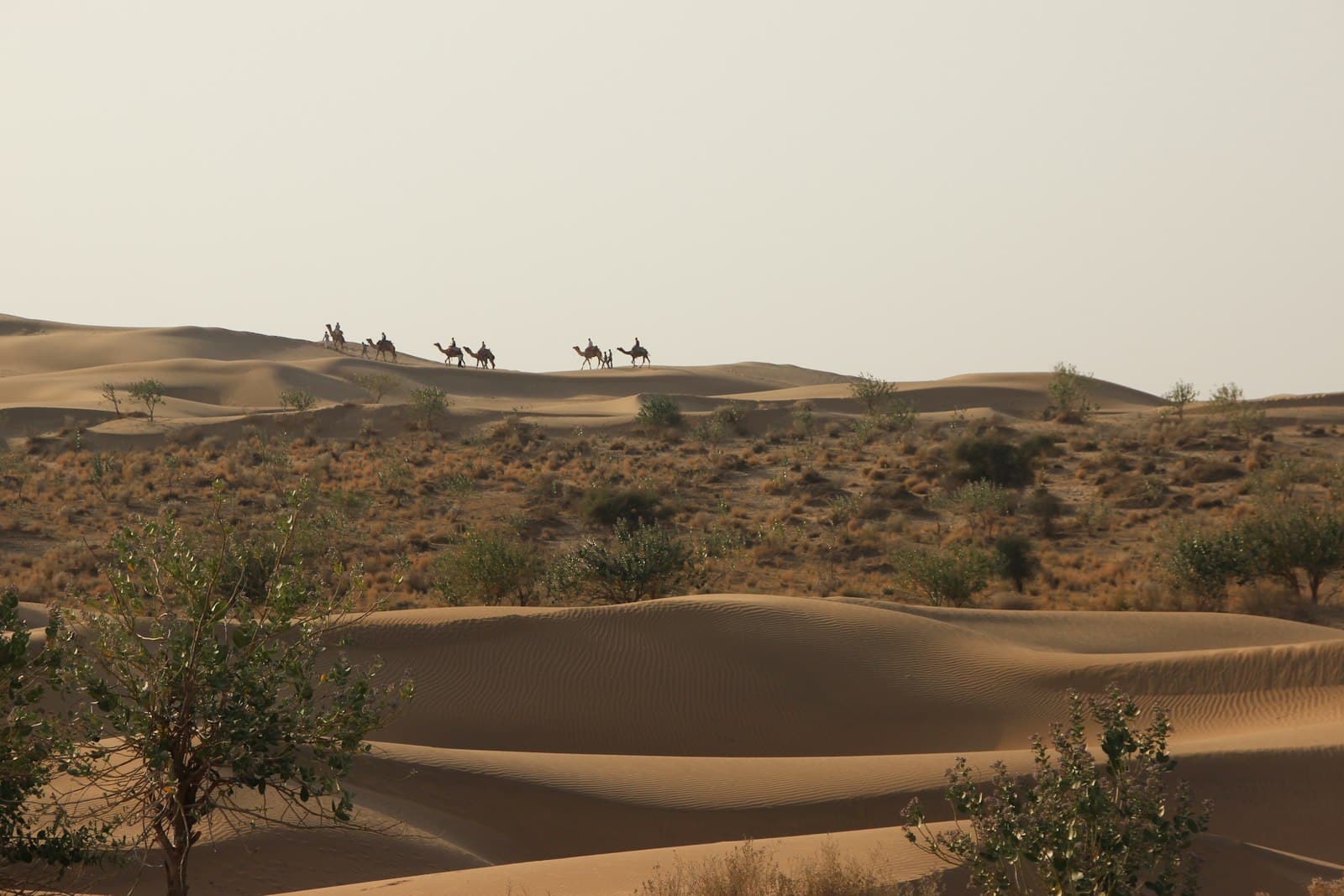
Jaisalmer, Rajasthan · Desert camp guide
Jaisalmer Desert Camp: The Complete Guide
What a night in the Thar actually looks like, and how to book it right
- Best time
- October to February
- Where
- Sam (about 40 km from Jaisalmer) or Khuri (about 40–45 km)
- Typical stay
- One night — afternoon arrival to mid-morning departure
- Price range (per person, one night)
- About ₹1,200 budget to ₹8,000+ luxury; much higher on 31 December
- Known for
- Sunset camel ride, Kalbelia dance, bonfire dinner, sunrise over the dunes
Overview
A night at a desert camp outside Jaisalmer is, for most people, the single thing a Rajasthan trip is built around: a camel or jeep ride out to the dune crest for sunset, a folk music and dance programme around a bonfire, a Rajasthani dinner under a genuinely dark sky, and sunrise over the sand before you head back to the city. It's a short drive from Jaisalmer and an easy add-on to any Rajasthan route, which is exactly why it's booked so heavily between October and February.
It's also one of the most commercialised stretches of desert in India, with hundreds of camps operating out of Sam and Khuri under names that change year to year, and a well-documented pattern of bookings that don't match what shows up on the day. None of that should put you off — it just means it's worth knowing what a fair package actually includes before you pay for one.
This guide covers the two main dune areas, what a typical package includes and doesn't, realistic prices by tent tier, an hour-by-hour sense of the evening and morning, and the booking checks that actually prevent the common problems.
What's included — and what usually isn't
Typically included
- Return transfer between your Jaisalmer hotel and the camp, with most packages
- A short camel or jeep ride out to the dune crest for sunset
- The evening cultural programme — live folk music, Kalbelia dance, often a puppet show, and a bonfire
- Dinner, usually a vegetarian buffet of Rajasthani dishes as standard
- One night in a tent, bedding included, with an attached or shared bathroom depending on the tier
- Breakfast the next morning before checkout
Usually extra
- Alcohol — many camps let you bring your own, a few sell it; ask before you arrive, don't assume
- A longer camel or jeep safari beyond the short sunset ride, if you want more time in the dunes
- Photography or videography charges, at some camps
- Non-vegetarian dishes, at camps whose standard buffet is vegetarian-only — confirm ahead if it matters to you
- Heating or AC upgrades at budget camps, especially relevant in the coldest and hottest months
Every camp packages this differently — always confirm the exact inclusions in writing before you pay.
Tent tiers and what they cost
Budget / standardAbout ₹1,200–2,000 per person
- Non-AC tent with a fan or cooler
- Shared or basic attached bathroom
- Simple bedding
- Standard group cultural programme and buffet dinner
Deluxe Swiss tentAbout ₹2,000–3,500 per person
- Non-AC Swiss-style tent with attached bathroom
- Better furnishing and bedding
- Same cultural programme, often a slightly more varied menu
Luxury Swiss tent (AC)About ₹4,000–8,000+ per person
- Air-conditioned or heated tent with attached bathroom
- Premium furnishing, sometimes a private sit-out
- More spacious dining and a fuller cultural programme
- Occasionally a smaller, more curated group size
Sam vs Khuri
Sam Sand Dunes
About 40 km from Jaisalmer, 45 to 60 minutes by road
The main, most-visited dune belt, with the largest concentration of camps, the biggest dunes, and the liveliest cultural programmes. This is where most first-time visitors and tour groups end up, and it's the easiest to arrange a transfer to.
Best for
- · First-time visitors
- · Groups wanting a full, lively programme
- · The widest choice of camps and tent tiers
Khuri
About 40 to 45 km from Jaisalmer, 45 to 60 minutes by road
A quieter dune belt and village south-west of the city, with smaller, less commercialised camps and more of a village feel. The dunes themselves are less crowded, and evenings tend to be calmer.
Best for
- · Couples and travellers who'd rather avoid crowds
- · A more low-key, village-style evening
- · Similar experience, often at a lower price
A typical evening and morning
Pickup from Jaisalmer
Most packages include a return transfer from your hotel; independent travellers can also take a taxi or shared jeep.
Check-in
Welcome drink, tent allocated, a little time to settle in before the dunes.
Camel or jeep ride to the dune crest
A short ride, not a long safari — long enough to get properly out onto open sand.
Sunset over the dunes
The single most-photographed moment of a Jaisalmer trip. Arrive a little early to get settled before the light goes.
Cultural programme
Live Manganiyar folk musicians, Kalbelia dance, often a puppet show, all around a bonfire back at camp.
Dinner
A Rajasthani buffet or sit-down meal — dal baati churma, ker sangri, gatte ki sabzi, bajre ki roti, and laal maas where non-veg is served.
Stay in your tent
Desert nights are genuinely cold from November to February, more so December and January — see what to pack below.
Sunrise
A second, optional camel or jeep ride to watch sunrise over the dunes, offered by most camps.
Breakfast
Back at camp, before checkout.
Return to Jaisalmer
Transfer back to your hotel or straight on to your next stop.
What to pack
- A warm jacket or fleece — nights drop sharply even when the day was warm, and it's genuinely cold December to January
- A scarf or stole to cover your head and face against blown sand on the dune ride
- Closed shoes rather than sandals — sand holds the day's heat, then turns cold and gritty at night
- Sunscreen, sunglasses and a hat for the afternoon transfer and sunset ride
- A torch or your phone's flashlight — camps are lit, but the paths between tents often aren't
- A power bank — charging points are limited or shared at budget and mid-range camps
- Cash in small notes — many camps and the camel or jeep operators don't take cards
Booking safely
A lot of Jaisalmer camp bookings go wrong in the same few ways. These checks prevent most of them.
- Book directly with the camp, or through a travel designer who has actually sent guests there. A lot of Jaisalmer camp marketing online is resold by agents who don't run the camp themselves, and the camp in the photos isn't always the one you're taken to.
- Avoid paying a full advance to an unfamiliar number or UPI ID with no paper trail. A modest deposit with the balance on arrival is standard and safer.
- Get the camp's exact name, location and your tent category confirmed in writing — SMS, WhatsApp or email — before you pay anything.
- Be cautious if a 'camp' has no fixed address you can find independently. Clusters of similarly named camps operating from the same patch of desert are a known pattern around Sam.
- If you booked a specific tent tier, check your tent against what you paid for as soon as you arrive, and raise it immediately rather than after the trip.
- Read recent reviews, not just the number of them. A page of near-identical five-star reviews posted in a short window is a common sign of fake reviews.
- Through Trippex, we only confirm camps we've actually sent guests to and checked ourselves — ask your travel designer which camp you'll be at, by name, before you pay.
Etiquette
- Dress modestly for the cultural programme — these are family venues and the performers are local artists, not street entertainment.
- Ask before photographing performers up close. A tip is welcome, not obligatory, and should go to the performer directly, not a middleman.
- Don't feed or approach the camels outside the ride itself — they're working animals with handlers nearby.
- Keep noise down after the programme ends. Most camps sit close to tents and small villages.
- Carry your rubbish back with you or use the bins provided. The dunes are a fragile landscape, not a venue someone else tidies up.
Best time to go
October to February is the desert camp season proper. December and January are the coldest, busiest and most expensive; shoulder months either side give similar experiences for less.
| Months | Weather | What it means for a camp night |
|---|---|---|
| Oct – Nov | Warm days, cool nights | Camps fully open and the season ramping up. Book ahead for Diwali week specifically — prices rise sharply. |
| Dec – Jan | Days 20–25°C, nights can fall below 5°C | The coolest, busiest and most photogenic months, and the most expensive. Book at least 2 to 4 weeks ahead; earlier still for New Year's Eve, when prices can run 2 to 4 times standard rates. |
| Feb | Still comfortable | Similar experience to December/January with slightly easier availability. |
| Mar | Warming quickly | Still workable early in the month; afternoons start getting hot. |
| Apr – Sep | Very hot, often 40°C+ by day | Many camps close or scale back; a handful stay open with AC tents only. Not the season to plan around. |
How to reach the dunes
- By road
- Sam is about 40 km from Jaisalmer, Khuri about 40 to 45 km — both 45 to 60 minutes by car. Most camp packages include the transfer both ways.
- By train
- Not applicable for the last stretch — reach Jaisalmer by train first (see the main Jaisalmer guide), then transfer to the dunes by road.
- By air
- Not applicable for the last stretch — Jaisalmer's small airport has limited seasonal flights; see the main Jaisalmer guide for details.
Extra costs to budget for
| Return transfer from Jaisalmer, if not bundled in the package | About ₹1,000–1,500 per vehicle |
|---|---|
| Short sunset camel ride | Usually included; where it's extra, about ₹200–500 per person |
| Longer camel safari (1–2 hours) | About ₹500–1,000 per person |
| Jeep safari into the dunes or Desert National Park | About ₹1,500–3,000 per vehicle |
| Diwali and New Year's Eve surcharge | Camps commonly charge 2 to 4 times their standard rate |
Figures last checked October 2026. Prices vary camp to camp and move sharply around Diwali and New Year — send an enquiry for a firm price on your dates.
A few more tips
- December to February gives the coolest, clearest light, but book early — it's also when camps sell out fastest.
- One night is enough for the full experience. A second night rarely adds much beyond cost, unless you specifically want a quieter second evening.
- Short on time or routing through midday? Some camps offer a sunset-only visit without the overnight stay, at a lower price — ask specifically, as not every camp offers it.
- If you're building this into a longer trip, see our 7-day and 11-day Rajasthan itinerary guides, which both route through a Sam dunes overnight.
FAQs
What is included in a Jaisalmer desert camp package?
Most packages include a return transfer from your Jaisalmer hotel, a short sunset camel or jeep ride to the dunes, an evening cultural programme (folk music, Kalbelia dance, a bonfire), dinner, one night in a tent, and breakfast. Alcohol, a longer safari, and photography charges are usually separate — always confirm exactly what's included before you pay.
Sam or Khuri — which desert camp is better?
Sam has the biggest dunes, the most camps to choose from, and the liveliest programmes — it's the default choice for first-time visitors and groups. Khuri is quieter, less commercial, and has more of a village feel, usually at a lower price. Neither is objectively 'better'; it depends on whether you want energy or calm.
How much does a desert camp in Jaisalmer cost?
Roughly ₹1,200–2,000 per person for a budget tent, ₹2,000–3,500 for a deluxe Swiss tent, and ₹4,000–8,000 or more for a luxury AC Swiss tent, all for one night including the standard inclusions. Prices commonly rise 2 to 4 times over standard rates during Diwali week and especially on 31 December.
Is one night at a desert camp enough?
Yes, for most travellers. A standard package already covers sunset, the evening programme, dinner, overnight and sunrise — the full arc of the experience. A second night mainly adds cost rather than a meaningfully different experience.
How cold does it get at night in the Jaisalmer desert?
From November to February it gets properly cold after dark, with December and January nights sometimes falling below 5°C, even though the daytime can still be warm. Pack a proper jacket, not just a light layer.
Is alcohol allowed at Jaisalmer desert camps?
It varies by camp. Many allow you to bring your own; a few sell it on site; some don't permit it at all. Ask your specific camp before you arrive rather than assuming either way.
How do I avoid a fake or scam desert camp booking in Jaisalmer?
Confirm the camp's exact name and tent category in writing before paying, avoid sending a full advance to an unfamiliar personal UPI ID with no paper trail, check your tent against what you booked as soon as you arrive, and be wary of near-identical five-star reviews posted in a short window. Booking through an operator who has actually sent guests to that specific camp is the most reliable safeguard.
What should I pack for a Jaisalmer desert camp?
A warm jacket for the cold night, a scarf for blown sand, closed shoes, sunscreen and a hat for the afternoon, a torch or phone flashlight for the paths between tents, a power bank, and cash in small notes, since many camps and ride operators don't take cards.
Is the desert camp suitable for children or elderly travellers?
Generally yes. The camel ride is optional — most camps offer a jeep alternative for anyone who'd rather not ride — and the programme itself is a seated evening of music and dinner. The main thing to plan around is the overnight cold, so pack warm layers regardless of age.
Do I need a permit to visit the Sam dunes?
No separate tourist permit is needed for a standard camp visit to Sam or Khuri. If a specific jeep safari route runs into the Desert National Park, the operator handles any park entry formalities as part of that add-on.
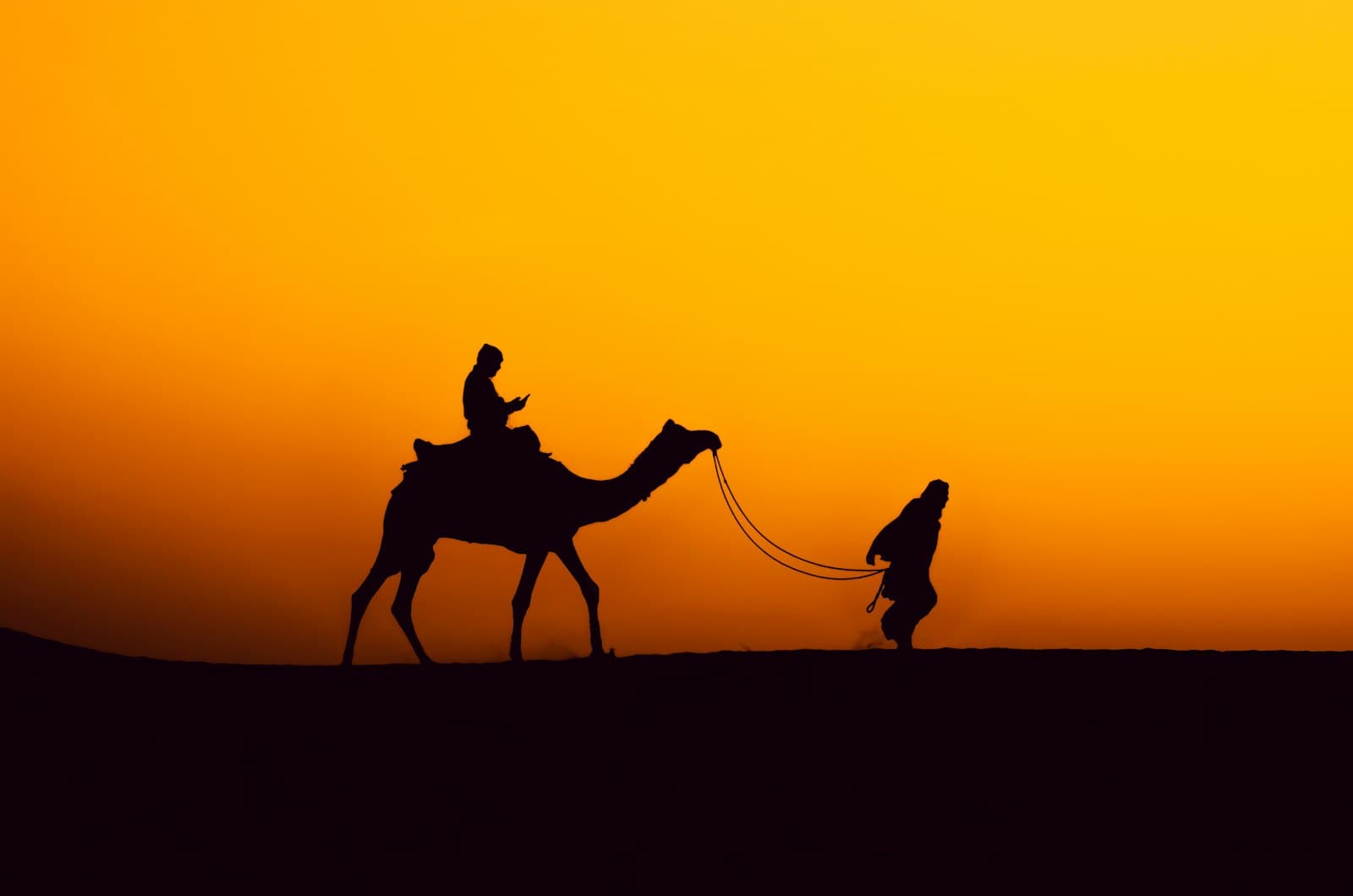
Trips that include a desert camp night
Ready-made routes with Jaisalmer and the dunes already built in.
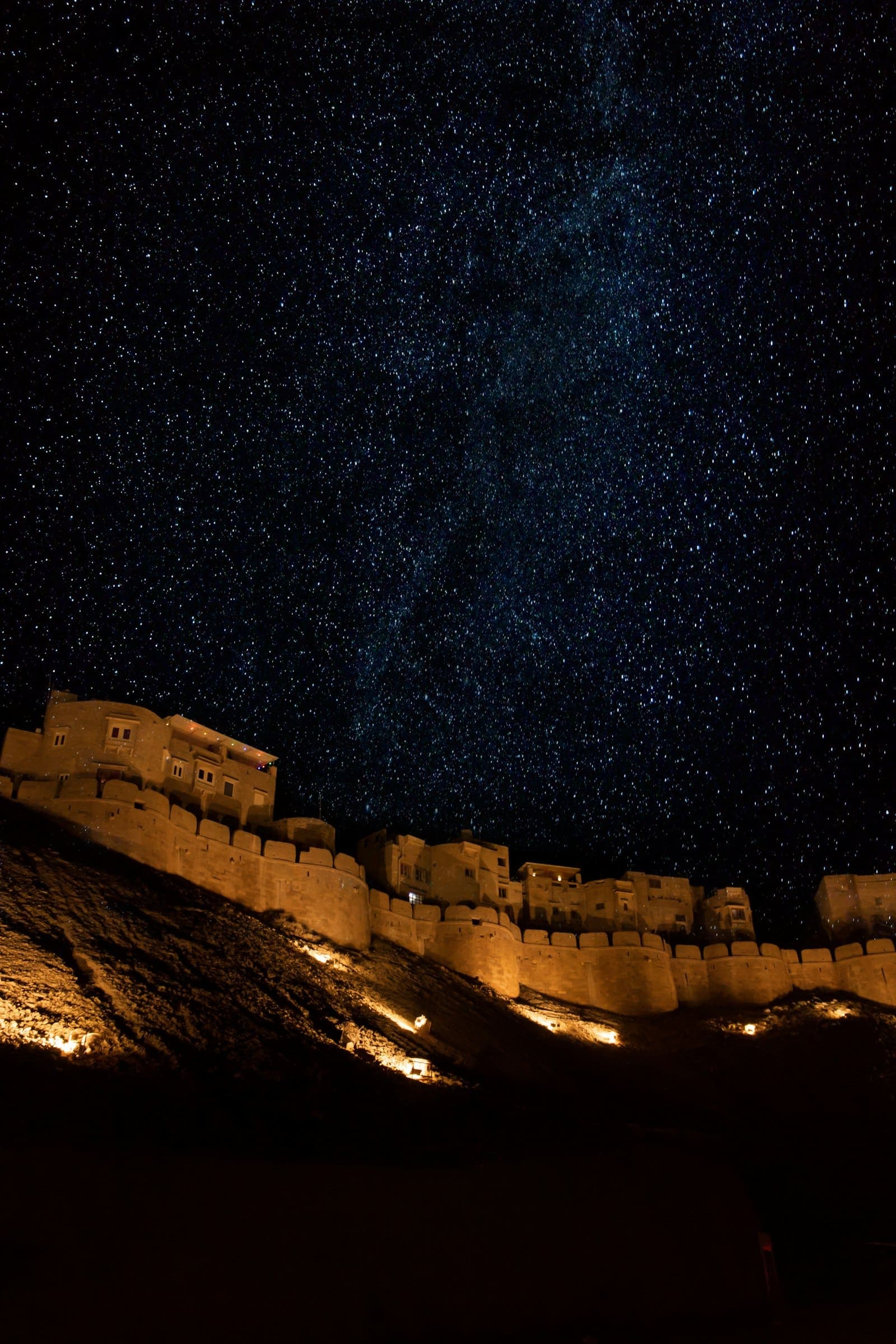
Rajasthan
Jaisalmer & the Thar — Fort, Havelis & Dunes
The living golden fort, the carved havelis of a caravan-trade city, and a night under canvas in the Sam dunes with a camel ride and folk music around the fire.
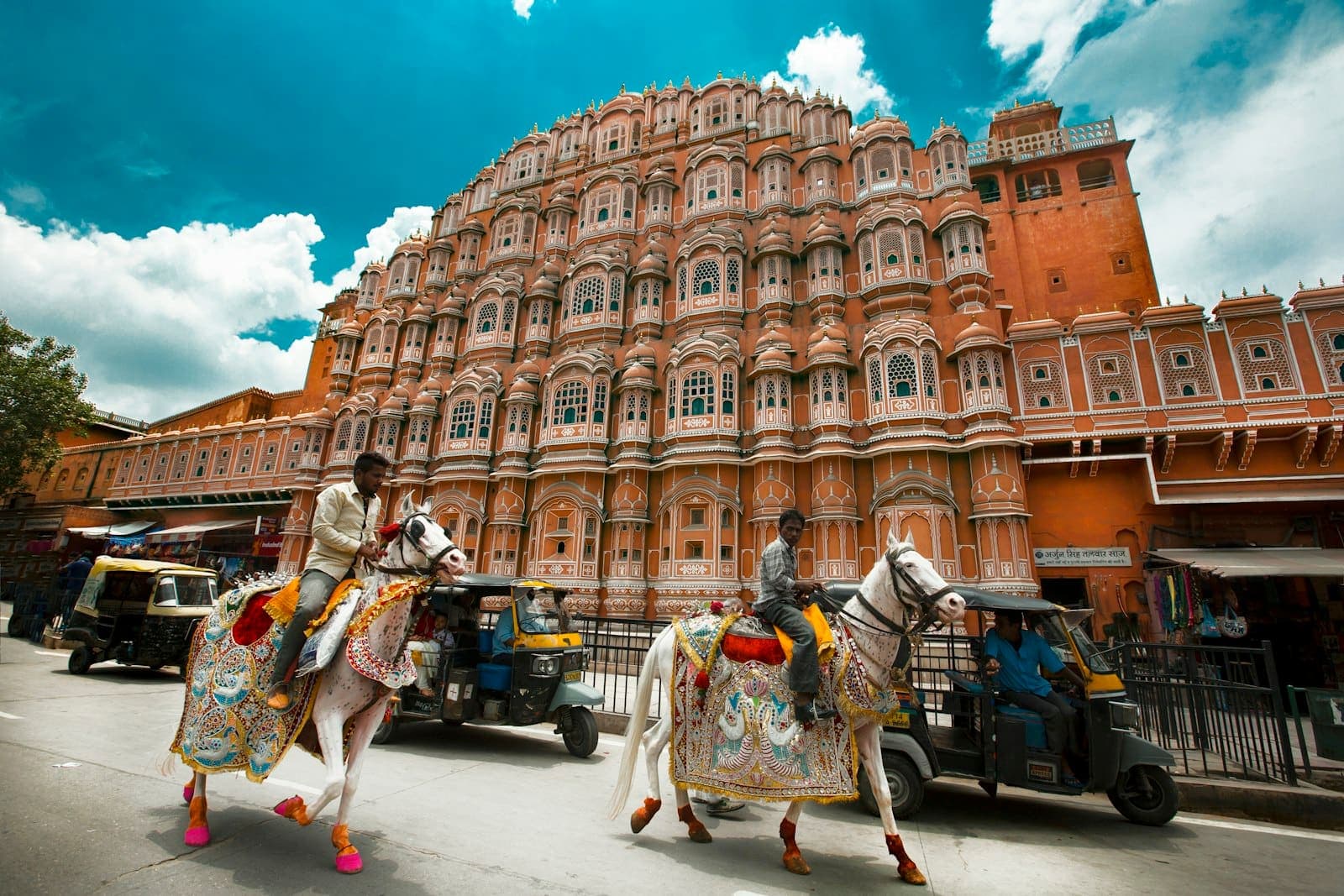
Rajasthan
Royal Rajasthan — Forts, Palaces & Golden Sands
The state's greatest hits in a week — Jaipur's Amber Fort, Jodhpur beneath Mehrangarh, the golden city of Jaisalmer with a desert night, and romantic Udaipur to finish.
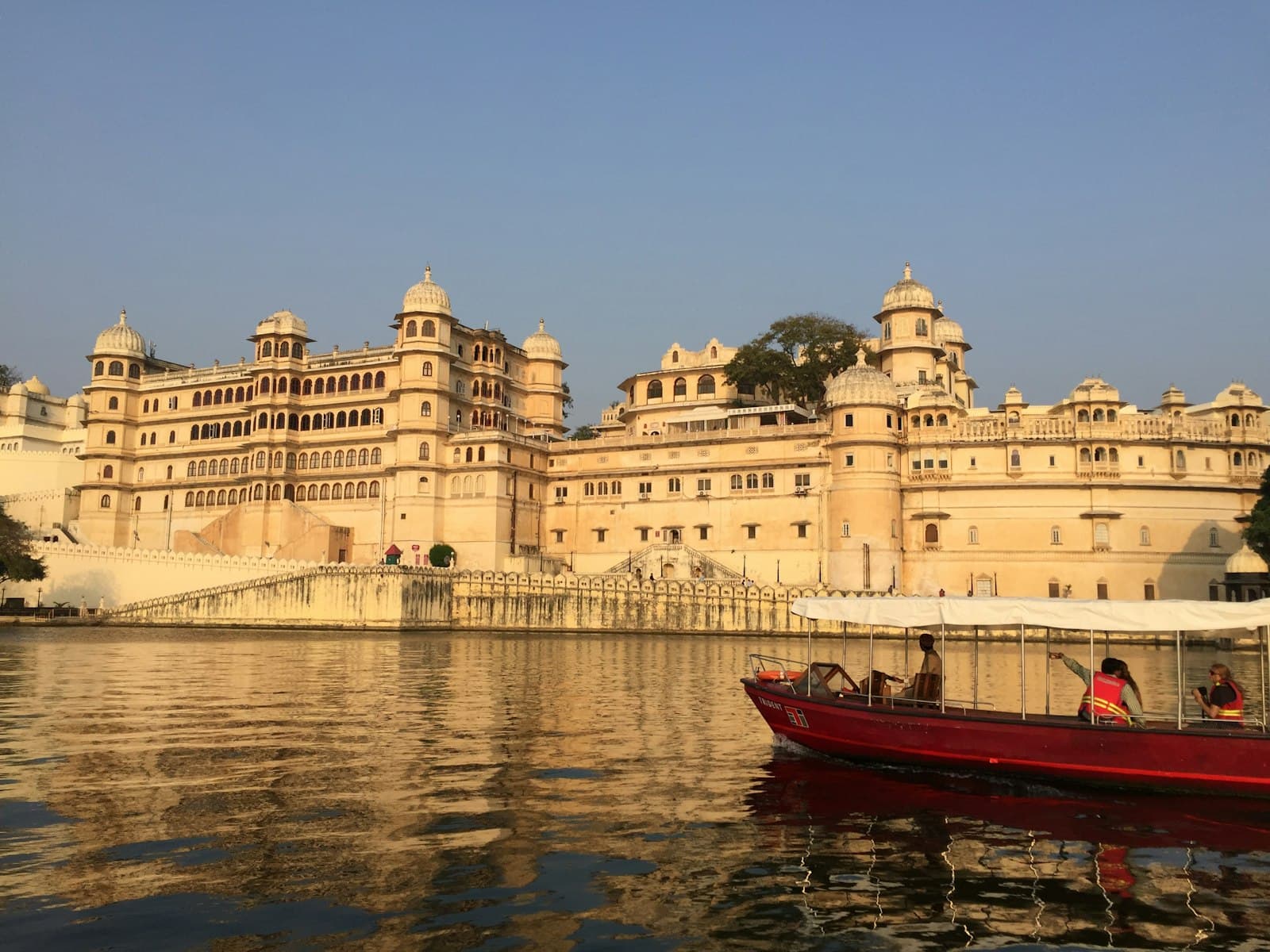
Rajasthan
Grand Rajasthan — The Complete Circuit
The unhurried version — Jaipur, the holy lake at Pushkar, Jodhpur, Jaisalmer and its dunes, Udaipur, and the cool hill retreat of Mount Abu, staying in palace and heritage hotels throughout.
Let's build your desert camp night
Send us a rough idea — a destination, a month, a budget — and we'll come back with a plan you can actually picture yourself on.