
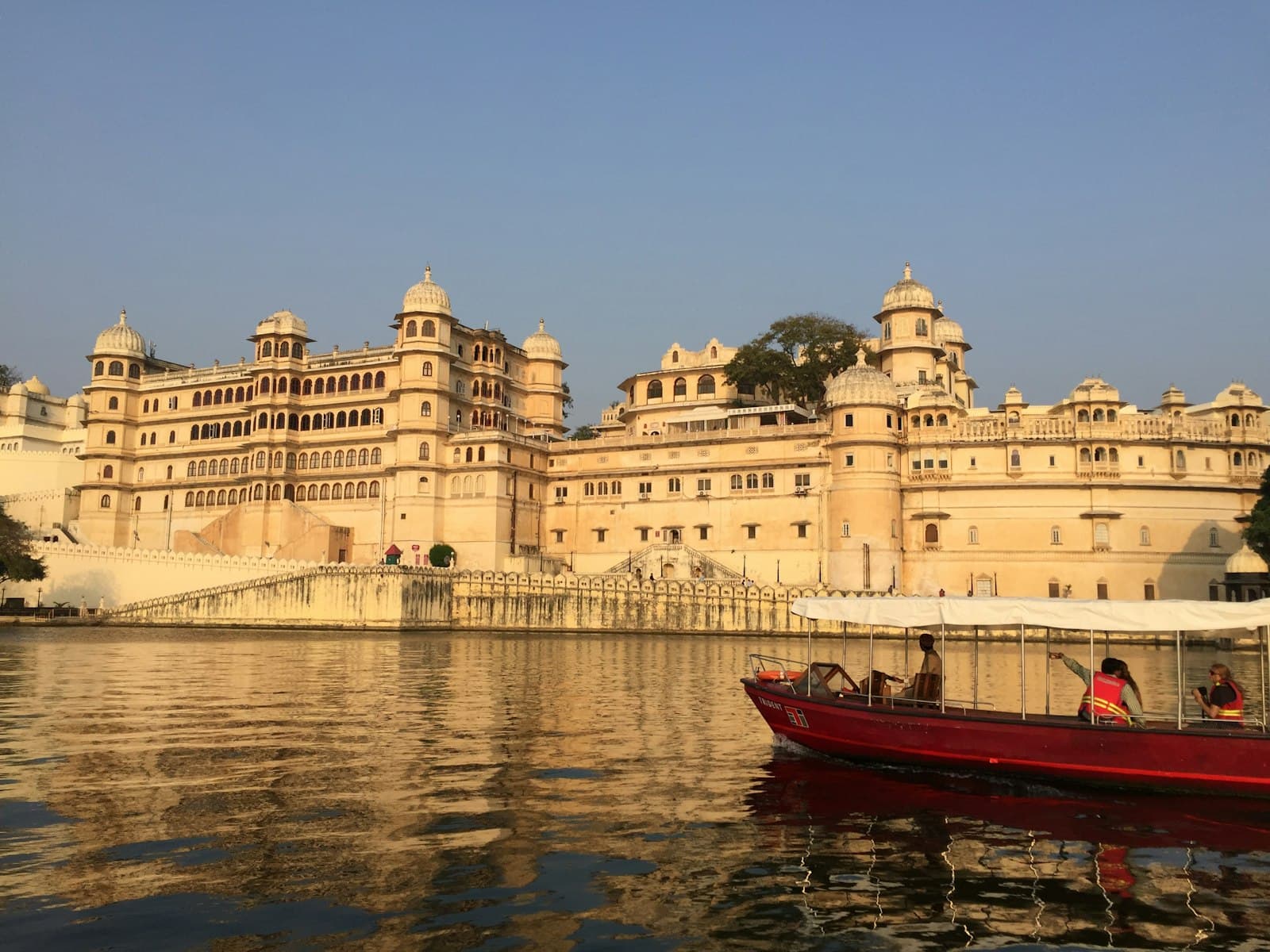
Rajasthan · Temples & pilgrimage
Rajasthan Temples & Pilgrimage Guide
The temples people plan a trip around — timings, mela dates, how to reach, and how to combine them
- Covers
- 8 major temples across Rajasthan
- Busiest season
- Chaitra and Ashwin/Bhadrapad fairs (roughly Mar–Apr and Aug–Oct)
- Entry
- Free darshan at all eight; some offer a paid faster queue in peak periods
- Dress
- Modest clothing expected everywhere; some temples are stricter than others
Overview
Rajasthan's forts and lakes get most of the attention from first-time visitors, but a separate, very large stream of travel into the state has nothing to do with sightseeing. Temples like Khatu Shyam and Salasar Balaji draw millions of pilgrims a year, several of them pulling bigger annual crowds than any single fort does — and for a lot of Indian travellers, a 'Rajasthan trip' means a temple circuit first and a sightseeing trip second, if at all.
These sites don't photograph the way Jaipur or Udaipur do, and most general Rajasthan guides give them a line or two at best. That undersells how significant some of them are: Nathdwara is arguably the single most-visited temple in the state, and Sanwariya Seth is considered the second most important Vaishnav pilgrimage site in Rajasthan after it.
This guide covers eight of the major ones — what each is dedicated to, why it matters, exact timings, the mela dates that draw the biggest crowds, how to reach it, and, where it makes sense, how to combine two or three of them into a single trip or fold one into a sightseeing itinerary you're already planning.
Khatu Shyam Ji
- Deity:
- Khatu Shyam (Barbarik, an eternal form of Krishna)
- Location:
- Khatu village, Sikar district
- Distance:
- About 80 km from Jaipur (roughly 2 hours by road)
Khatu Shyam is worshipped here as Barbarik, grandson of the Pandava prince Bhima, who according to the Mahabharata sacrificed his own head to Krishna to honour a vow — and was granted divine status in return. The shrine is one of the most revered in Rajasthan, drawing devotees from across North India year-round.
The original temple dates to 1027 CE, built by Roop Singh Chauhan and his wife Narmada Kanwar, and was substantially renovated in 1720 CE on the orders of the ruler of Jodhpur, giving the temple much of its present form.
Timings
Summer: 4:30 am–12:30 pm and 4:00 pm–10:00 pm. Winter: 5:30 am–1:00 pm and 5:00 pm–9:00 pm.
Best time / mela
The Falgun Mela, in February or March, draws lakhs of devotees over a few days — the single busiest stretch of the year by a wide margin.
How to reach
By road, about 80 km from Jaipur (2 hours). By train, Ringas Junction (17 km away) has services from Jaipur, Delhi and Sikar; autos and shared tempos cover the last stretch.
- Visit early morning or late evening outside the Falgun Mela to avoid the longest queues.
- Salasar Balaji is only about 110 km away (2.5 to 3 hours) — the two are commonly visited together.
Salasar Balaji
- Deity:
- Hanuman, worshipped here as Balaji
- Location:
- Salasar town, Churu district
- Distance:
- About 171 km from Jaipur (roughly 3.5 hours by road)
The Hanuman idol at Salasar is unusual: it has a beard and moustache, giving it a distinctly human form rather than the more common depiction. It's one of Rajasthan's two most-visited Hanuman temples, alongside Mehandipur Balaji, and is particularly revered by Rajput and warrior communities as a protector.
The temple's origin dates to 1754 CE (Vikram Samvat 1811), when a farmer named Ginthala Jat from Asota village in Nagaur is said to have found the idol while ploughing his field.
Timings
Morning: 4:00 am–1:00 pm. Evening: 3:00 pm–10:00 pm.
Best time / mela
Two major fairs each year, at Chaitra Purnima (March–April) and Ashwin Purnima (September–October), when devotees walk barefoot from far outside the district to reach the temple.
How to reach
By road from Jaipur via Sikar or Ringas, about 165–171 km (around 3.5 hours). The nearest railway station is Sujangarh, about 17 km away.
- Pair this with Khatu Shyam — the two are only about 110 km apart and are very commonly done as a single trip.
- Expect the roads into Salasar to slow considerably during the Chaitra and Ashwin fairs; add extra time if you're travelling then.
Sanwariya Seth (Sawariya Seth)
- Deity:
- Krishna, in his dark ('sanwariya') form
- Location:
- Mandfiya village, Chittorgarh district, on the Chittorgarh–Udaipur highway (NH-48)
- Distance:
- About 40 km from Chittorgarh, about 85 km from Udaipur
According to local legend, a cowherd named Bholaram dreamed in 1840 of three divine idols buried near Bagund village. When the site was dug up, three idols of Krishna were found, and temples were built for each within about 5 km of one another — at Mandfiya (the main shrine, also called Sanwaliya Ji Dham), Bhadsoda, and Chhapar.
It's widely regarded as the second most important Vaishnav pilgrimage site in Rajasthan after Nathdwara, and has a particular following among traders and businesspeople, many of whom treat Sanwariya Seth as a silent partner in their ventures and return a share of their profits as an offering.
Timings
5:30 am–11:00 pm daily, with a break from 12:00 pm to 2:30 pm. Mangla Aarti at 5:30 am, Rajbhog from 10:00–11:15 am, Sandhya Aarti from 8:00–9:15 pm.
Best time / mela
Open and busy year-round, with the heaviest daily footfall rather than one dominant annual fair — expect it to be busiest on Ekadashi days and through the monsoon month of Shravan.
How to reach
Sits directly on NH-48 between Chittorgarh and Udaipur. The nearest railway station is Chittorgarh Junction (about 40 km), with direct trains from Jaipur, Ahmedabad, Mumbai and Delhi.
- An easy stop if you're already driving between Udaipur and Chittorgarh — both have their own city guides on this site.
- Don't confuse this with Nathdwara's Shrinathji Temple — they're different temples about 60 to 70 km apart, both dedicated to Krishna, which causes a lot of mix-ups when people are planning.
Shrinathji Temple, Nathdwara
- Deity:
- Shrinathji — Krishna in the form he took to lift Govardhan hill
- Location:
- Nathdwara town, Rajsamand district, on the Banas river
- Distance:
- About 48 km from Udaipur railway station, about 41 km from Udaipur airport
This is the principal shrine of the Pushtimarg tradition founded by Vallabhacharya, and arguably the single most-visited temple in Rajasthan. The 17th-century temple is also known for its Pichhwai paintings — large, detailed cloth backdrops hung behind the deity — and for a strict daily routine of eight darshans.
Timings
Open roughly 5:00 am–12:30 pm and 4:00 pm–8:30 pm, structured around eight named darshans: Mangala (5:30–6:30 am), Shringar (7:15–7:45 am), Gwal (9:15–9:45 am), Rajbhog (11:15 am–12:00 pm), Utthapan (3:30–4:00 pm), Bhog (4:45–5:15 pm), Sandhya Aarti (5:15–6:15 pm) and Shayan (7:30–8:00 pm).
Best time / mela
Annakut and Janmashtami are the two biggest festival days, both drawing very large crowds.
How to reach
About 48 km from Udaipur by road; regular buses and taxis run from the city. It also sits close to the Kumbhalgarh–Ranakpur road.
- Traditional, modest dress is expected more strictly here than at most Rajasthan temples — men in dhoti-kurta and women in a sari or similarly modest traditional wear is the norm, with shoulders and knees covered as an absolute minimum.
- Pick which of the eight darshans you want to see and time your visit around it — turning up between darshan windows means a longer wait for the doors to open.
Mehandipur Balaji
- Deity:
- Hanuman, worshipped here as Balaji Maharaj
- Location:
- Mehandipur, Dausa district, on the Jaipur–Agra highway
- Distance:
- About 103–110 km from Jaipur (roughly 2.5 to 3 hours), about 130 km from Agra
This temple is known across India for a very specific reason: it's one of the few places where rituals to treat people believed to be possessed by evil spirits are performed openly, under long-standing traditional practice. It draws thousands of visitors every week for this reason, alongside pilgrims visiting simply to pray to Hanuman.
Timings
Roughly 6:00/7:00 am–8:00 pm, with morning aarti around 6:00 am, evening aarti around 7:15 pm, and a short midday break around 1:00 pm.
Best time / mela
Tuesdays and Saturdays, the traditional days for Hanuman worship, are consistently the busiest.
How to reach
On the Jaipur–Agra highway, about 103–110 km from Jaipur. The nearest railway station is Bandikui Junction, about 36 km away, with taxis covering the rest.
- Go in knowing this isn't a quiet, contemplative temple visit — the healing rituals are loud and intense, and it can be a lot for visitors who weren't expecting that atmosphere. It's worth seeing for what it is, but set your expectations before you go.
- Its position on the Jaipur–Agra highway makes it a workable stop for anyone also doing a Golden Triangle route.
Ramdevra (Baba Ramdev Temple)
- Deity:
- Ramdevji (Ramshah Pir) — a 14th-century folk saint revered by both Hindu and Muslim communities
- Location:
- Ramdevra village, near Pokaran, on the Jodhpur–Jaisalmer road
- Distance:
- About 119 km from Jaisalmer, about 184 km from Jodhpur, about 12 km from Pokaran
Ramdevji is one of Rajasthan's few genuinely syncretic pilgrimage figures — Hindu devotees revere him as a saint and an incarnation of Krishna, while many Muslim devotees know him as Ramshah Pir, and both visit the same shrine. The state government has flagged Ramdevra as a growing religious-tourism circuit, so expect continued development around the site.
Timings
4:00 am–9:00 pm.
Best time / mela
The Bhadrapad Mela is the major annual event — in 2026 it runs from 12 to 21 September — and draws an enormous gathering from across the region.
How to reach
On NH11, the Jodhpur–Jaisalmer highway. Ramdevra has its own railway station, 1.4 km from the temple, with direct trains. The nearest airport is Jodhpur, about 184 km away.
- This sits directly on the Jodhpur–Jaisalmer road, so it's an easy stop if you're already covering that leg — including on our 7-day and 11-day Rajasthan itineraries.
- Avoid the Bhadrapad Mela window if you want a quiet visit; book well ahead if you specifically want to experience the fair.
Karni Mata Temple (the 'Rat Temple')
- Deity:
- Karni Mata, a 14th-century mystic venerated as an incarnation of Durga
- Location:
- Deshnoke, near Bikaner
- Distance:
- About 30 km from Bikaner
Famous worldwide for the thousands of rats that live freely within the temple and are considered sacred — believed by devotees to be reincarnations of Karni Mata's own storytellers and clan. It's one of the most unusual pilgrimage sites anywhere in India, and draws visitors as much for that distinctiveness as for devotion.
Timings
See the full write-up for current timings.
Best time / mela
Major fairs run in March–April and around Navratri in September–October.
How to reach
About 30 km from Bikaner by road.
- Bring socks if you'd rather not walk the temple floor barefoot, and shuffle rather than step, to avoid treading on a rat.
Brahma Temple, Pushkar
- Deity:
- Brahma — one of the very few temples anywhere dedicated to him
- Location:
- Pushkar town
- Distance:
- About 145 km from Jaipur, 14 km from Ajmer
One of the only functioning Brahma temples in the world, and the spiritual centre of the sacred town built around Pushkar Lake. Daily chanting ceremonies happen two hours before sunrise, 40 minutes after sunset, and five hours after sunset.
Timings
See the full write-up for current timings.
Best time / mela
Busiest around the Pushkar Camel Fair, held on the Kartik Purnima full moon in October or November.
How to reach
In the centre of Pushkar town, about 145 km from Jaipur and 14 km from Ajmer.
- Phones and cameras aren't allowed inside — there are lockers near the entrance.
Combining temples into one trip
Khatu Shyam + Salasar Balaji
About 110 km apart and commonly done as a single 1 to 2 day trip from Jaipur or Delhi — the classic pairing for this region.
Sanwariya Seth + Nathdwara
Both sit on or near the Udaipur–Chittorgarh corridor, around 60 to 70 km apart. Easy to fold into a Rajasthan sightseeing trip that already includes Udaipur, Chittorgarh or Kumbhalgarh.
Ramdevra on the Jaisalmer road
Directly on the Jodhpur–Jaisalmer highway, so it needs no detour if you're already covering that leg — including our 7-day and 11-day Rajasthan itineraries.
Mehandipur Balaji on the Agra road
Sits on the Jaipur–Agra highway, making it workable as a stop for a Golden Triangle route without much extra driving.
Karni Mata and the Pushkar Brahma Temple
Both already sit inside cities you're likely visiting anyway — Bikaner and Pushkar — so they need no special planning beyond what's in those city guides.
Etiquette
- Dress modestly everywhere — shoulders and knees covered is the baseline, and Nathdwara in particular expects more traditional dress.
- Leave leather items (belts, some wallets) in the car at the stricter Vaishnav temples — Sanwariya Seth and Nathdwara both discourage leather inside.
- Expect security and bag checks, and phone or camera restrictions inside the sanctum, at the busier temples.
- Queues can run for hours on Tuesdays and Saturdays at the Hanuman temples, and during any of the mela dates above — plan your timing around that if you want a shorter wait.
- Prasad and offerings are sold by licensed shops around each temple; prices aren't fixed everywhere, so it's fine to ask before you buy.
- Photography is generally not allowed inside the sanctum, even where it's fine in the outer courtyard.
Costs at a glance
| General darshan | Free at all eight temples |
|---|---|
| Paid 'Sugam'/VIP darshan queue, where offered | Available at some of the busier temples during peak periods and melas; rates change often, so ask locally or check the temple's own page |
| Overnight stay in a temple town | Simple guesthouses and dharamshalas typically run ₹500–2,000 a night |
| Private car for a day trip combining two temples | About ₹2,500–4,000, depending on distance |
| Prasad and offerings | A few hundred rupees is typical for a standard offering |
Figures last checked October 2026. Mela dates follow the lunar calendar and move year to year — confirm the current dates before you travel around one.
A few more tips
- If you're planning around a mela date, check the current year's dates before you book — several of these follow the lunar calendar and move by one to two weeks each year.
- A private car makes the temple-combining trips above far easier than public transport, especially for Khatu Shyam + Salasar Balaji or Sanwariya Seth + Nathdwara.
- None of these need advance booking for a standard darshan outside mela season — just allow extra time for queues at the more popular ones.
- If a pilgrimage circuit is the main purpose of your trip, say so when you enquire — the route looks quite different from a standard sightseeing itinerary and we'll plan it that way from the start.
FAQs
What are the major pilgrimage temples in Rajasthan?
The most-visited are Khatu Shyam Ji (Sikar district), Salasar Balaji (Churu district), Sanwariya Seth (near Chittorgarh), the Shrinathji Temple at Nathdwara, Mehandipur Balaji (Dausa district), Ramdevra (near Pokaran, Jaisalmer district), the Karni Mata 'rat temple' at Deshnoke near Bikaner, and the Brahma Temple in Pushkar.
Can Khatu Shyam and Salasar Balaji be visited in one trip?
Yes — they're about 110 km apart, roughly 2.5 to 3 hours by road, and are very commonly visited together as a single 1 to 2 day trip from Jaipur or Delhi.
What is the difference between Khatu Shyam and Salasar Balaji?
Khatu Shyam is a Krishna shrine dedicated to Barbarik, a figure from the Mahabharata. Salasar Balaji is a Hanuman temple, known for its distinctive bearded idol. They're different deities and different traditions, though both draw huge crowds and are often visited on the same trip because they're close together.
Is Sanwariya Seth the same as the Nathdwara temple?
No, though they're often confused since both are Krishna temples in the same general region. Sanwariya Seth is at Mandfiya, near Chittorgarh, about 85 km from Udaipur. The Shrinathji Temple is in Nathdwara, about 48 km from Udaipur. They're around 60 to 70 km apart and are separate shrines with separate histories.
What is Mehandipur Balaji known for?
It's known across India for rituals performed there to treat people believed to be possessed by evil spirits — a long-standing tradition specific to this temple. It's a far more intense, unusual atmosphere than a typical temple visit, and worth knowing that before you go.
When is the best time to visit these temples?
Outside the major melas, these temples are open and busy year-round, so there's no single best season. If you want to witness a specific fair — Khatu Shyam's Falgun Mela (Feb–Mar), Salasar's Chaitra and Ashwin Purnima fairs, or Ramdevra's Bhadrapad Mela (roughly Aug–Sep) — check that year's exact dates, since they follow the lunar calendar. If you'd rather avoid the biggest crowds, visit outside those windows.
How far is Ramdevra from Jaisalmer?
About 119 km, directly on the Jodhpur–Jaisalmer highway — an easy stop if you're already travelling that route.
Is there an entry fee for these temples?
General darshan is free at all eight. Some of the busier temples offer a paid faster-moving queue during peak periods and melas, often called a Sugam or VIP darshan, but it isn't required for a standard visit.
Can a temple circuit be combined with a regular Rajasthan sightseeing trip?
Yes, and several of these temples sit naturally on routes you'd already be driving — Mehandipur Balaji on the Jaipur–Agra road, Ramdevra on the Jodhpur–Jaisalmer road, and Sanwariya Seth and Nathdwara both near Udaipur and Chittorgarh. Tell us if pilgrimage is a priority and we'll build the route around that rather than treating it as an afterthought.
Routes that can include these temples
Ready-made Rajasthan itineraries we can adapt to add a pilgrimage stop or two.
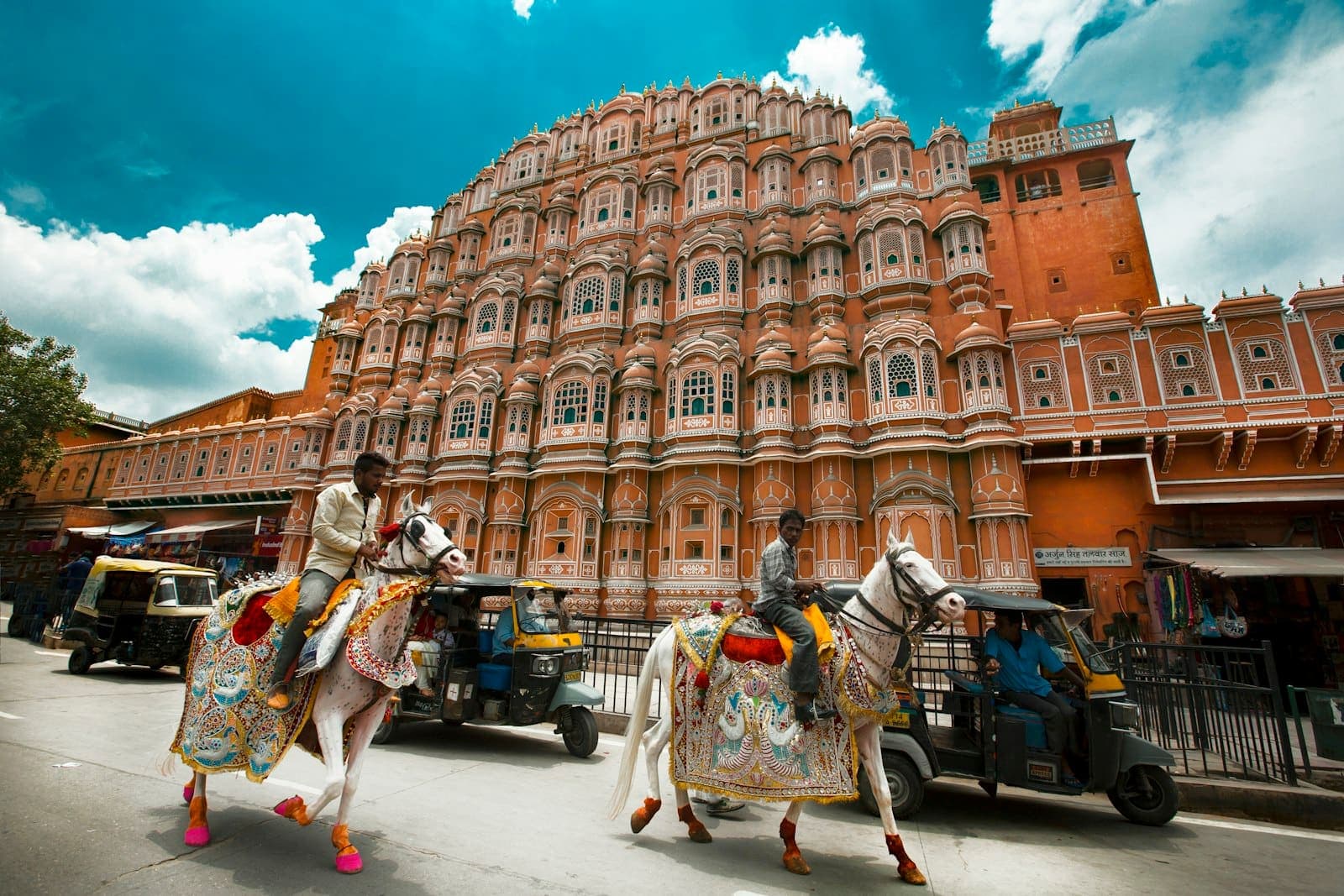
Rajasthan
Rajasthan Heritage — Jaipur, Jodhpur, Udaipur
The three great cities of Rajasthan by private car, staying in heritage havelis and palace hotels, with a desert night if you want it.
Rajasthan
Royal Rajasthan — Forts, Palaces & Golden Sands
The state's greatest hits in a week — Jaipur's Amber Fort, Jodhpur beneath Mehrangarh, the golden city of Jaisalmer with a desert night, and romantic Udaipur to finish.
Rajasthan
Grand Rajasthan — The Complete Circuit
The unhurried version — Jaipur, the holy lake at Pushkar, Jodhpur, Jaisalmer and its dunes, Udaipur, and the cool hill retreat of Mount Abu, staying in palace and heritage hotels throughout.
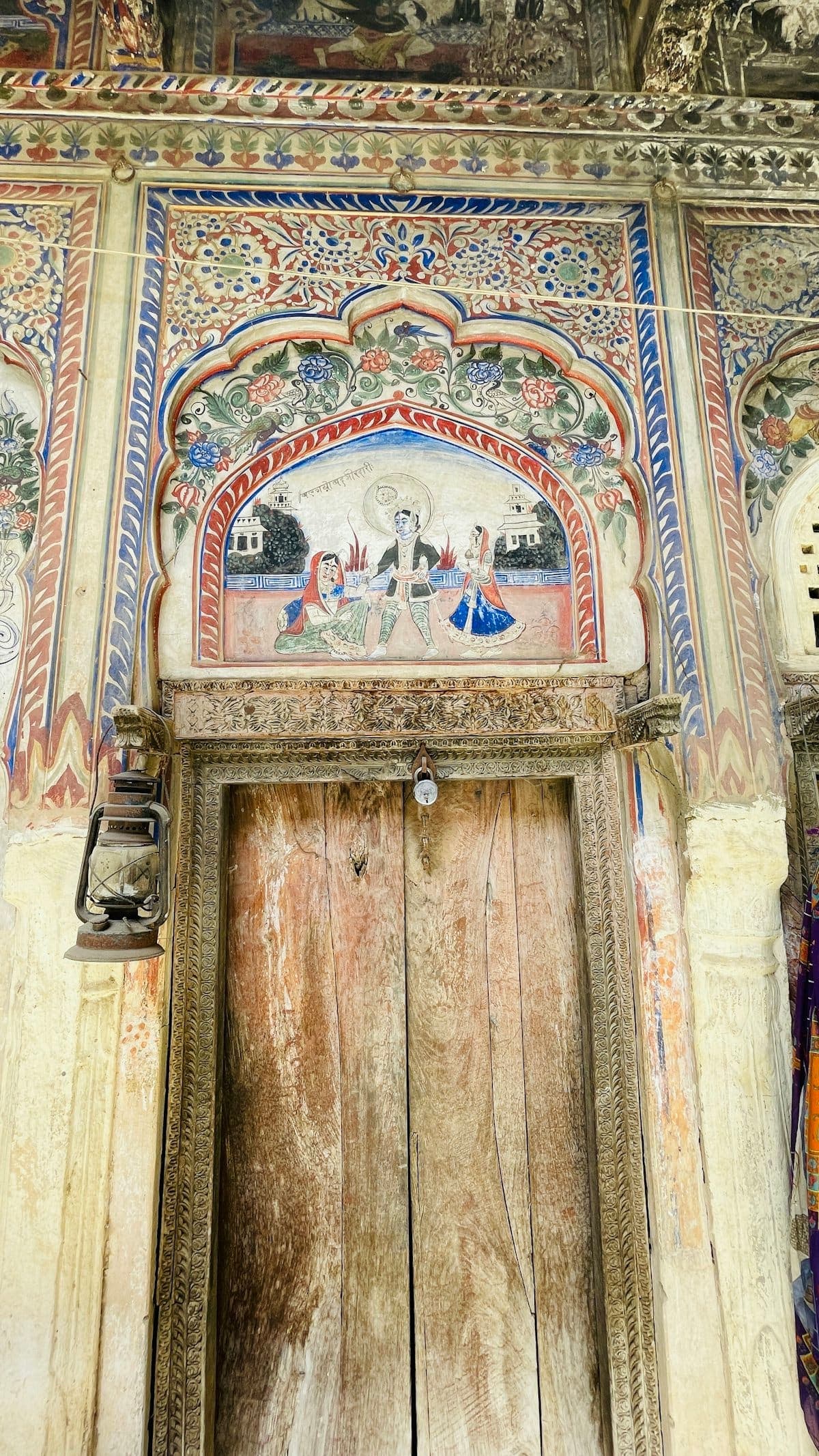
Rajasthan
Shekhawati — Rajasthan's Open-Air Gallery
The quiet, offbeat corner north of Jaipur where merchant families covered whole towns in frescoes. Slow days among painted havelis, staying in a converted castle or two.
Let's plan your Rajasthan temple trip
Send us a rough idea — a destination, a month, a budget — and we'll come back with a plan you can actually picture yourself on.